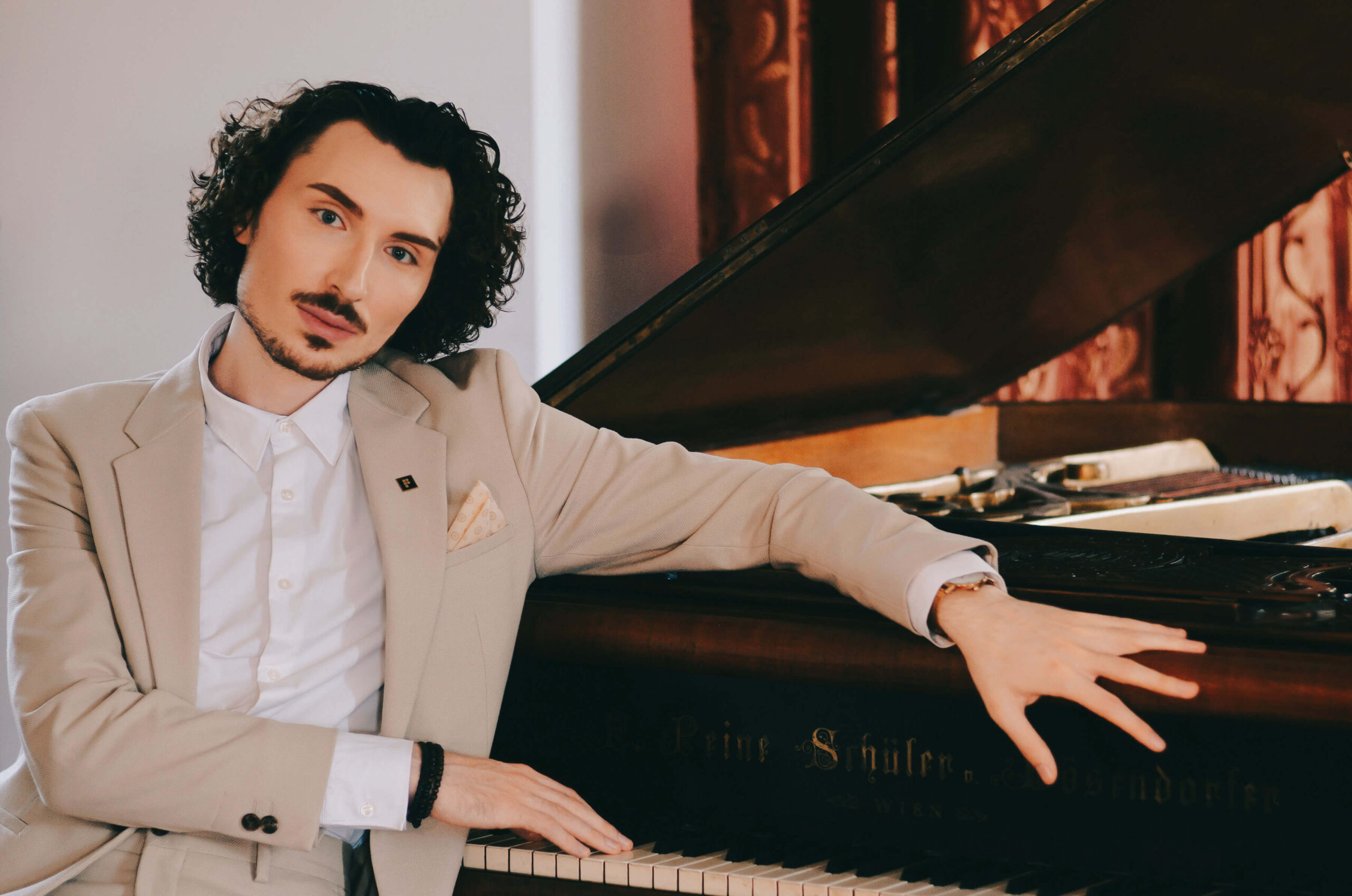
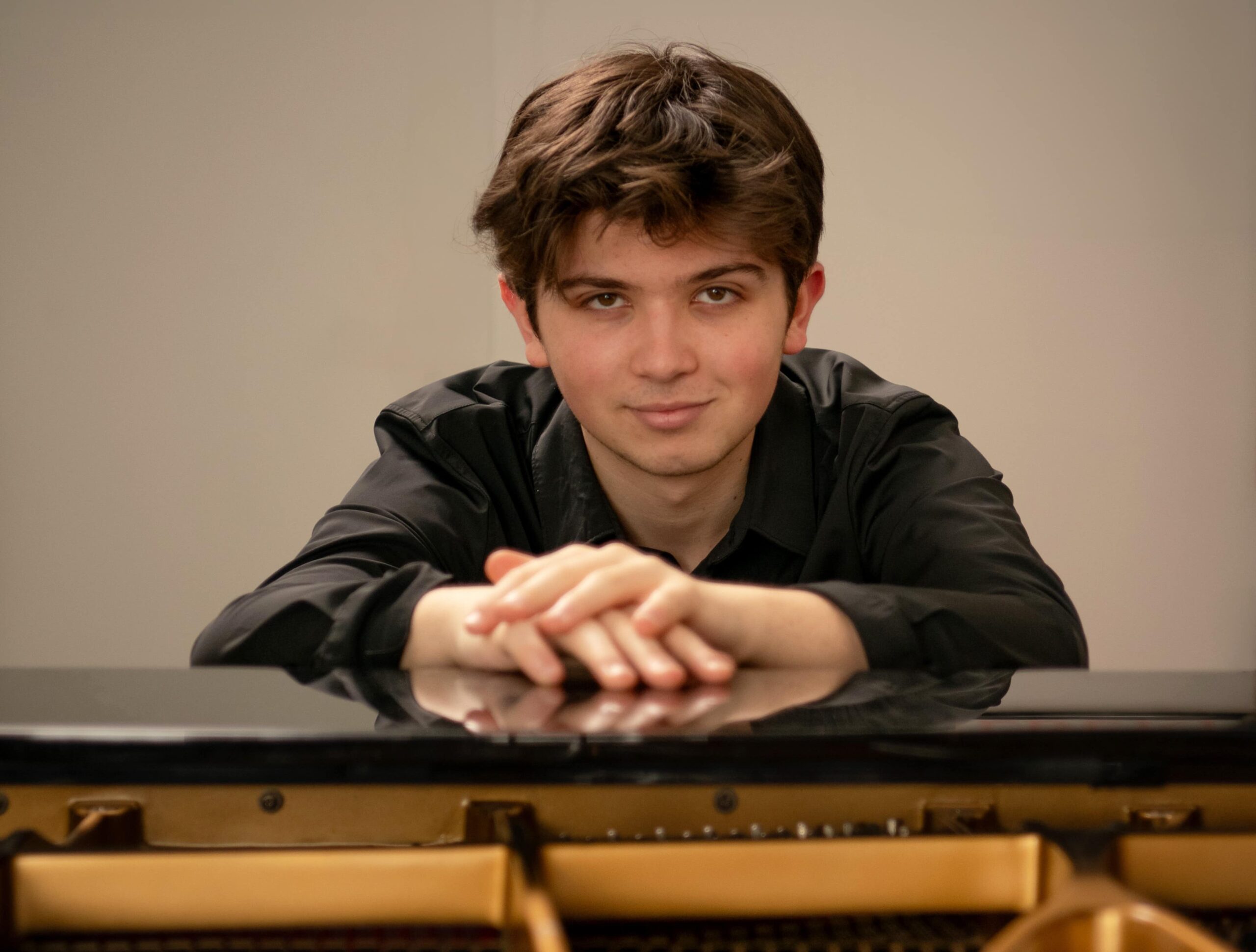
Born in Milan in 2006, Antonio Alessandri won First Prize at the Italian Finals of the Steinway Young Talents Competition at the age of eleven, subsequently representing Italy at the International Winners’ Concert held at the Laeiszhalle in Hamburg. In 2022, he won three international piano competitions: the Livorno Piano Competition, the Premio Marizza (Trieste) and the Premio Giangrandi-Eggmann (Cagliari), in addition to receiving the Young Talent Award from the Milan Conservatory. In 2023, he was a semi-finalist at the Ettore Pozzoli International Piano Competition, where he was awarded the Fondazione Bracco Special Prize for Best Young Talent.
In 2025, he was a finalist at the prestigious International J. S. Bach Competition Saarbrücken, receiving the Diploma of Merit, one of only four prizes awarded. In the same year, he was also a semi-finalist at the Russian Piano Competition in Sanremo and won the Rosalyn Tureck International Bach Competition in New York, receiving the Evgeny Kissin Grand Prize / Steinway Award (overall winner of the competition), the Dame Myra Hess Recital Award, and the Rosalyn Tureck Prize for Category 8 (Goldberg Variations). In 2026, he won the Rospigliosi International Piano Competition, where he was also awarded the Schumann Special Prize.
He has appeared in recital for numerous Italian concert institutions, including the Società dei Concerti and the Società del Quartetto in Milan, the Brescia and Bergamo International Piano Festival, Mikrokosmi (Ravenna), the Società Filarmonica Ascolana, Associazione Kandinsky (Palermo), Amici della Musica di Trapani, Società dei Concerti di Piacenza, Amici della Musica di Padova, the Teatro Sociale in Como, the Teatro Fraschini in Pavia, Palazzo Brancadoro in Fermo, and the Società dei Concerti di Bergamo. He is also a regular guest artist at Piano City Milano. In 2024, he made his debut at MITO Settembre Musica, and in 2025 he was invited by Professor Andrzej Pikul to perform in Kraków as part of a piano marathon dedicated to Maurice Ravel.
His orchestral appearances are equally noteworthy. After making his concerto debut at the age of 12 at the Teatro dei Teatini in Piacenza with Mozart’s Piano Concerto No. 11 in A major, K. 413, he performed at the Festival Mozart with I Virtuosi Italiani and, in 2023, appeared with the Orchestra of the Teatro Goldoni in Livorno performing Tchaikovsky’s Piano Concerto No. 1.
Since 2021, he has collaborated regularly with I Pomeriggi Musicali Orchestra in Milan, performing under conductors including George Pehlivanian, Stefano Montanari, and Alessandro Cadario. In 2025, he performed Richard Strauss’s Burleske, broadcast by RAI Radio 3 Suite. In the same year, he performed Ravel’s Piano Concerto in G major with the Orchestra dell’Istituzione Sinfonica Abruzzese conducted by Carlo Goldstein, and made his debut in Milan’s Sala Verdi performing Tchaikovsky’s Piano Concerto No. 1 with the Orchestra of the Milan Conservatory.
He began studying the piano at an early age and entered the Conservatory at the age of 7. Having trained under Davide Cabassi, he attended the Lieven Piano Foundation in Vienna and participated in masterclasses with distinguished musicians including Andreas Staier, Lilya Zilberstein, Paul Roberts, Ronald Brautigam, Arie Vardi, Tatiana Zelikman, Alon Goldstein, Alexei Volodin, and Ferenc Rados. He is currently pursuing his Bachelor’s Degree at the Giuseppe Verdi Conservatory in Milan under the guidance of Maria Grazia Bellocchio.
In 2020, at the Teatro Verdi in Pordenone, he recorded Beethoven’s Piano Concerto No. 1 with Davide Cabassi in the format of a lecture-concert, later broadcast on RAI 5 and made available on RaiPlay. In 2026, he was featured on RAI Radio 3 Next Gen. His debut recording, devoted to Johann Sebastian Bach’s Goldberg Variations, was released in 2024 by DueErre Produzioni and is available on all major digital platforms.
The concerts are generously sponsored by the Paul M. Angell Family Foundation, the Illinois Arts Council and by individual donors.