Piano Gems of the 18th and 19th Centuries

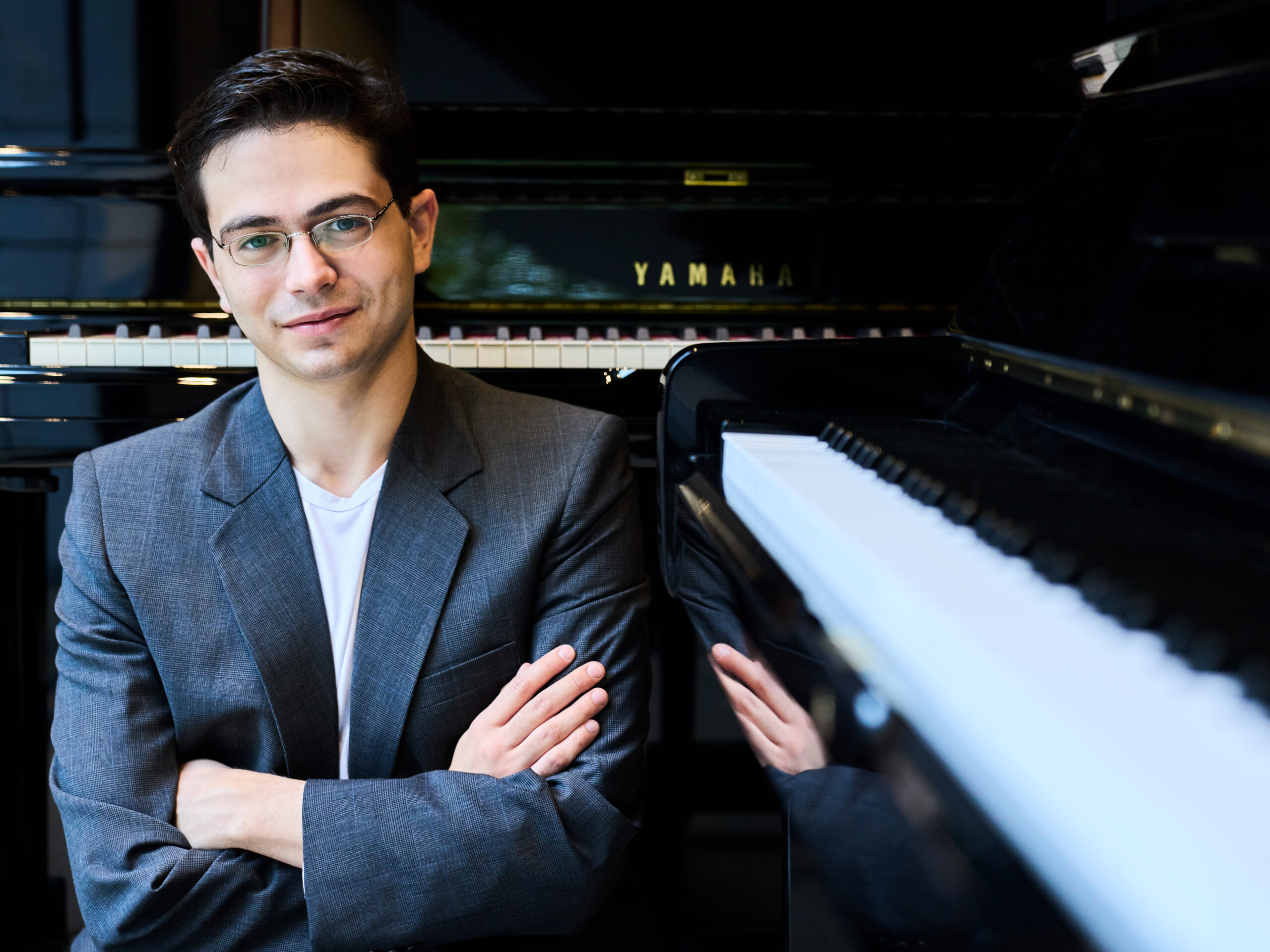
Ariel Lanyi, piano

  • Joseph Haydn (1732-1809) - Sonata in G major, Hob.XVI:39 (1780) (17’)
  • Allegro con brio
  • Adagio
  • Prestissimo
  • Frédéric Chopin (1810-1849) - Impromptu no. 2 in F-sharp major, Op. 36 (1839) (6’)
  • Johannes Brahms (1833-1897) - Intermezzi, Op. 117 (1892) (14’)
  • Andante Moderato
  • Andante non troppo e con molta espressione
  • Andante con moto
  • Joseph Haydn (1732-1809) - Sonata in G major, Hob.XVI:39 (1780) (17’)
  • Haydn’s keyboard sonatas remain unjustly neglected in the modern recital hall compared to those of Mozart or Beethoven. This G major Sonata, published in 1780, is a prime example of a masterpiece hiding in plain sight—greatly underplayed, yet bursting with the composer's signature structural wit and emotional intelligence. The outer movements are quintessentially typical of Haydn: inventive, characteristically playful, and driven by sudden, theatrical silences. However, the true weight of the sonata probably resides in the second movement, Adagio. Here, Haydn steps away from strict Classical symmetry to embrace the Empfindsamer Stil, the “sensitive style”. This aesthetic aimed to capture the raw, unpredictable and often imbalanced flux of human emotion. Rather than unfolding in long, predictable melodic lines, the music speaks through a series of sighs, rhetorical pauses, and expressively significant fermatas, making the movement feel like a most candid confession.
  • Frédéric Chopin (1810-1849) - Impromptu no. 2 in F-sharp major, Op. 36 (1839) (6’)
  • While Chopin’s fiery Fantaisie-Impromptu is frequently played for its virtuosic allure, the Second Impromptu, composed in 1839, is a far more elusive and subtle work. The defining characteristic of this work is its overarching nobility. It opens not with a brilliant flourish, but with a quiet, stepping bass line that evokes a solemn procession. The melody that floats above it is understated and deeply dignified. Even when the narrative shifts—breaking into an unexpected, triumphant march in a somewhat foreign key—the music never loses its poise. Chopin avoids the trap of overt sentimentality, delivering instead a work of aristocratic qualities where the emotions run deep precisely because the music never traverses the boundaries of taste.
  • Johannes Brahms (1833-1897) - Intermezzi, Op. 117 (1892) (14’)
  • If Haydn's sonata is the work of a man engaging with the world and Chopin's is a study in dignity, Brahms’s Intermezzi Op. 117 evoke the sound of a man turning utterly inward. Written in 1892, just five years before his death, Brahms famously referred to these three miniatures as the “cradlesongs of my grief.” There is an overwhelming sense of autumnal introspection in these three pieces. The first, in E-flat major, is prefaced by a Scottish lullaby about a mother weeping for her child, its sweet melody undercut by a haunting, shadowy middle section. The second Intermezzo evokes music from keyboard suites by Bach, as well as the more folkloric music that Brahms was deeply immersed in. The third intermezzo, the most austere of the three, is perhaps an allusion to his German Requiem, a much earlier work. It carries a religiosity in its opening, stripped bare of anything other than a melody played in unison. The work comes to an end with a gesture of melancholy mixed with resignedness, perhaps even acceptance. Program Notes by Ariel Lanyi

In 2023, Ariel Lanyi was honored to receive the Prix Serdang, a prize awarded by the distinguished Austrian pianist Rudolf Buchbinder. The prize is endowed with CHF 50,000, recognising a young pianist’s achievements and acting as an investment in their future. In 2021, he received the 3rd prize at the Leeds International Piano Competition.

Recent highlights have included recitals at the Wigmore Hall, the Grafenegg festival in Austria, Frankfurt Alte Oper, the Kissinger Festsommer and Mecklenburg-Vorpommern festivals in Germany, and in festivals across the UK. Also a regular visitor to North America, he has made appearances at the Vancouver Recital Society, Bravo!Vail festival in Colorado and Merkin Hall in New York, as well regular appearances at the Miami International Piano Festival.

Ariel has appeared with various orchestras, including the Mahler Chamber Orchestra, Mozarteumorchester Salzburg, Royal Liverpool Philharmonic Orchestra, Israel Philharmonic, Vienna Radio Symphony Orchestra, Sinfonia Viva and City of Birmingham Symphony Orchestra.

His newest recording, Organ Reflections, a recording of piano music inspired by the organ by Mozart, Franck, and Reger, was released to critical acclaim in May 2025 (“…the admirable Lanyi drawing out their many and varied colours superbly” – from a 5-star review from the BBC Music Magazine).

Born in Jerusalem, Ariel studied with Lea Agmon and Yuval Cohen. He completed his studies at the Royal Academy of Music, London, with Hamish Milne and Ian Fountain.

Other awards include 1st Prize at the Grand Prix Animato Competition in Paris and 1st Prize in the Dudley International Piano Competition, as well as a finalist award at the Rubinstein Competition. Ariel was recently made an Associate of the Royal Academy of Music.

About the Dame Myra Hess Concerts

The concerts are generously sponsored by the Paul M. Angell Family Foundation, the Illinois Arts Council and by individual donors.

Upcoming Performances

Stay connected with us on social
Join our mailing list and stay up to date.
<

Subscribe

* indicates required