
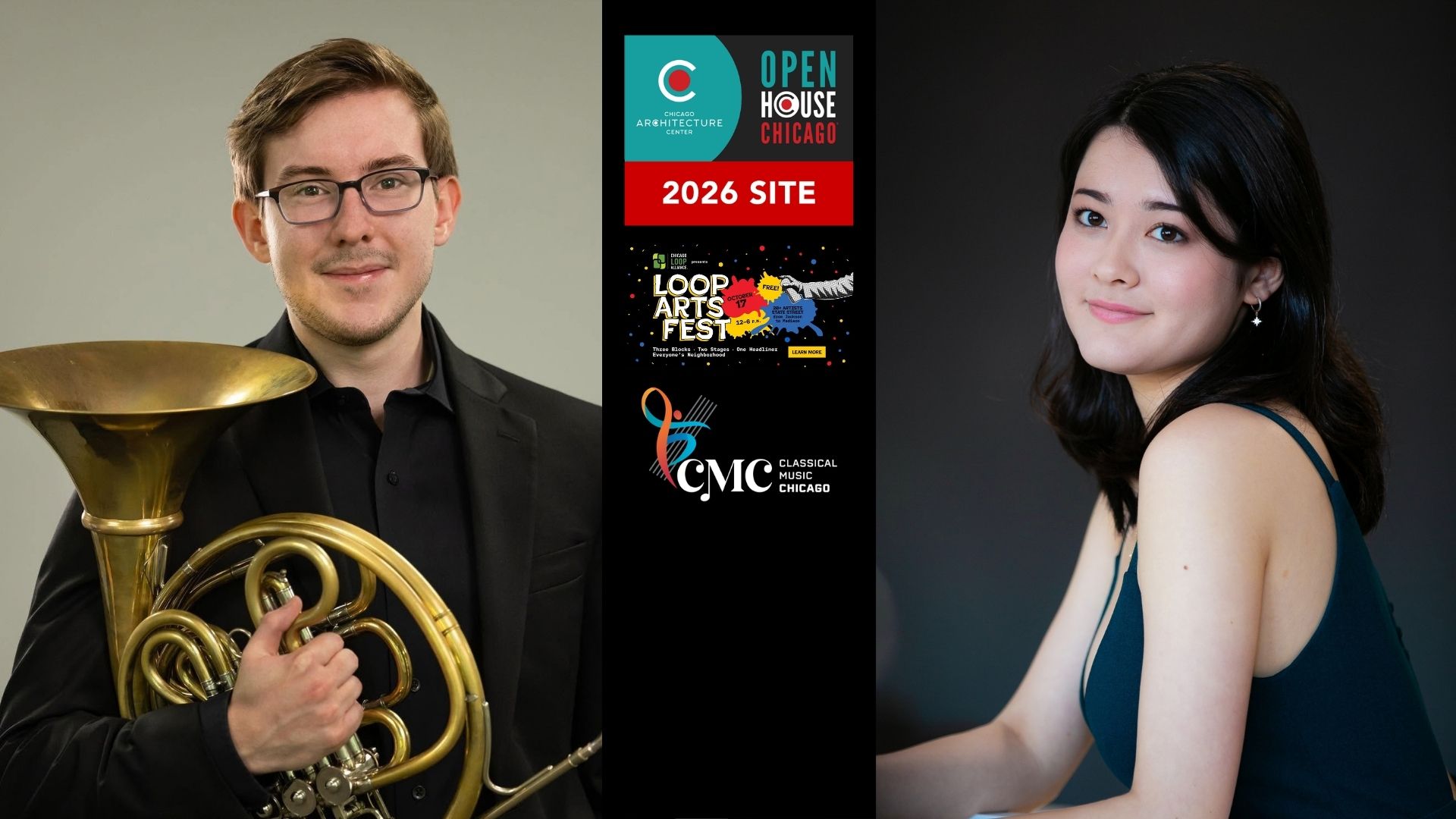
Ryan Williamson, horn and Umi Garrett, piano
Seventeenth Church of Christ, Scientist, Chicago, 55 E. Wacker Drive


October 14, 2026

12:15 PM

Seventeenth Church of Christ, Scientist, Chicago - 55 E. Wacker Drive
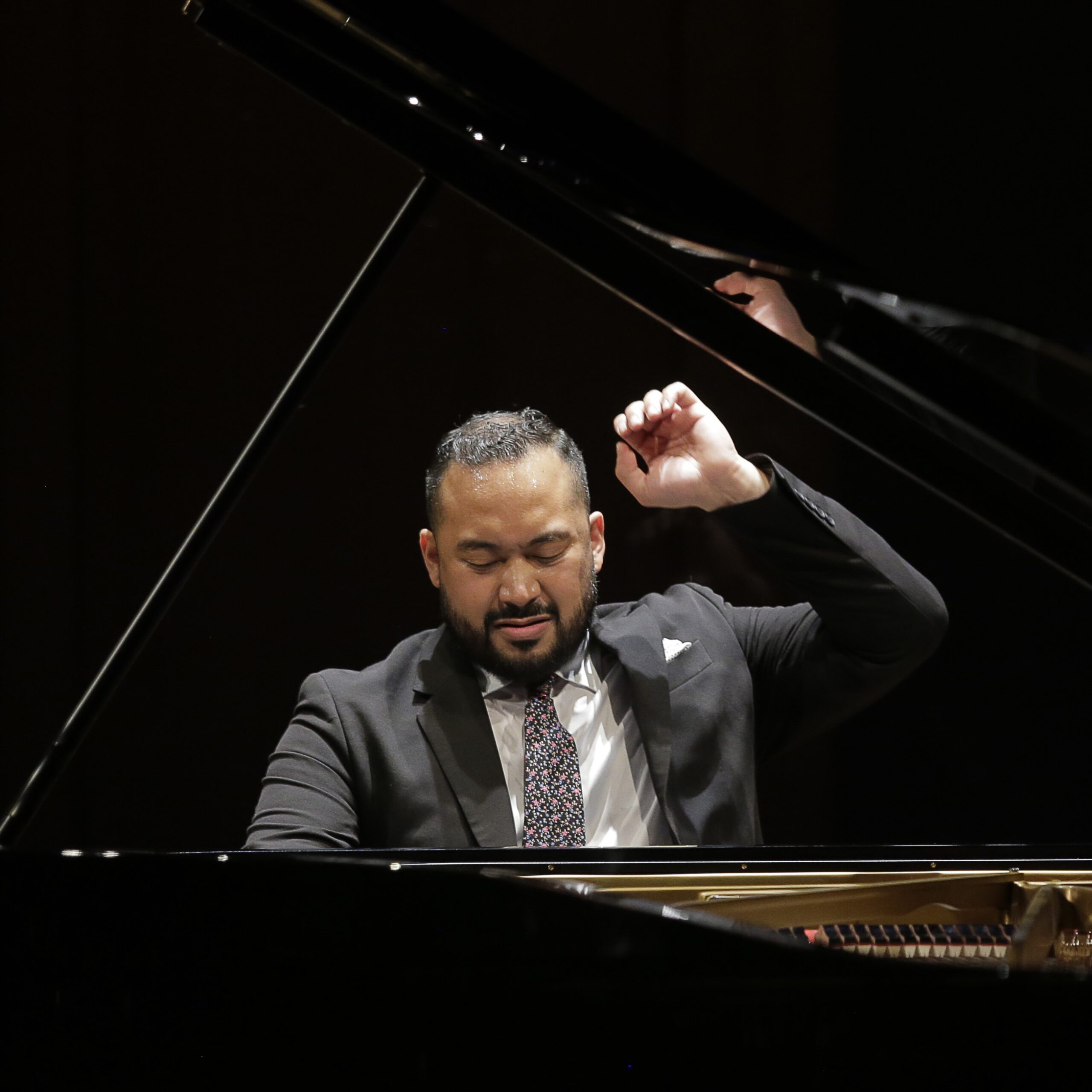
Acclaimed for his “most assured pianism,” and “natural, songful lyricism” (The Dallas Morning News), pianist and educator Jonathan Mamora strives to uplift and positively influence others using music as a means for service. An Indonesian-American and Southern California native now with a burgeoning performing career, Jonathan’s commitment to service is steadfast—whether playing in church or in the community or on the concert stage.
Applauded as “a rising star in the piano realm” (New York Classical Review), Mr. Mamora has performed throughout North and South America, Europe, and Asia, and he has enjoyed remarkable recent success, winning first prize at numerous prominent international piano competitions (IPC’s), including: Hilton Head IPC; Scottish IPC; Maria Canals Barcelona IPC; Olga Kern IPC (New Mexico); AntwerPiano International Competition; Dallas IPC; and the Palm Springs IPC (formerly the Virginia Waring). In May 2025, he was one of 30 elite pianists invited to compete in the Van Cliburn IPC in Fort Worth, TX.
His May 2023 debut recital at Carnegie Hall’s Weill Recital Hall drew great praise from the New York Concert Review: “Mr. Mamora’s playing itself is larger than life…(with) a technique so solid that it seemed at times that he couldn’t play a wrong note if he tried (and)…an encyclopedic array of dynamics and articulations.” He returned to Weill Hall in October 2025 for another critically praised recital presented by the HHIPC, and other current recital engagements include: the Bachauer Festival in Salt Lake City; Chopin Foundation of the US in Miami and Ft. Lauderdale; the Cleveland Museum of Art; Cliburn Festival America 250 in Ft. Worth; Green Lake Festival in Wisconsin; and the Savannah Music Festival.
Following his concerto debut at age 13 with the La Sierra University Orchestra, Mr. Mamora has gone on to perform with such orchestras as the Royal Scottish National Orchestra, Orquesta Sinfónica de Madrid, New Mexico Philharmonic, Orquesta Ciudad de Granada, and Santa Barbara Symphony, among others. Upcoming concerto engagements include: Hilton Head Symphony Orchestra, Greenville Symphony Orchestra, American Festival Pops Orchestra, Las Colinas Symphony Orchestra (TX), South Carolina Philharmonic Orchestra, and a return with the Royal Scottish National Orchestra.
Mr. Mamora has served as a church musician much of his life and currently serves as Organist at La Sierra University Church in Riverside, CA. He often performs as a collaborative pianist for vocalists, instrumentalists, ensembles, and choirs, and has received the Eastman ‘Excellence in Accompanying’ Award. He also values education as an important tool in music making and now serves as Director of Keyboard Studies at La Sierra University.
Jonathan Mamora is a candidate for the Doctor of Musical Arts in Piano Performance and Literature at the Eastman School of Music under the tutelage of Douglas Humpherys, whom he served as studio assistant. He received his Bachelor of Music from La Sierra University and his Master of Music from The Juilliard School. His previous piano teachers include Elvin Rodríguez and Hung-Kuan Chen, and organ teachers include Kimo Smith and William Porter.
The concerts are generously sponsored by the Paul M. Angell Family Foundation, the Illinois Arts Council and by individual donors.
Program: Dame Myra Hess Memorial Concerts
Seventeenth Church of Christ, Scientist, Chicago, 55 E. Wacker Drive
Program: Dame Myra Hess Memorial Concerts
Seventeenth Church of Christ, Scientist, Chicago, 55 E. Wacker Drive
Program: Dame Myra Hess Memorial Concerts
Seventeenth Church of Christ, Scientist, Chicago, 55 E. Wacker Drive