The Schumann’s Part 2, Tours and Courting

Jinzhao Xu, piano

  • Clara Schumann (1819-1896) - Impromptu in G major, “Souvenir de Vienne”, Op. 9 (1837) (9’)
  • Robert Schumann (1810-1856) - Piano Sonata in F-sharp minor (1835) (30’)
  • Introduzione: Un poco Adagio - Allegro vivace
  • Aria
  • Scherzo: Allegrissimo - intermezzo: Lento
  • Finale: Allegro. un poco maestoso
  • Program Notes:
  • Much of the piano music we now associate with early Romanticism took shape during the 1830s. Mendelssohn published his first Songs without Words, while Chopin wrote his First Ballade, Études Op. 25, and Twenty-Four Preludes. In the same decade, Robert Schumann composed Carnaval, Fantasiestücke, and the C-major Fantasy. The piano was equally at home in the intimacy of the salon and on the public concert stage, capable of suggesting private confession one moment and dazzling virtuosity the next. Clara and Robert Schumann explored both sides of this new musical world, each in a distinctly personal way.
  • Clara Schumann: Souvenir de Vienne, Op. 9 Vienna marked a turning point in the career of Clara Wieck, later Clara Schumann. During her visit in 1837–38, the eighteen-year-old pianist captivated the city’s audiences and was appointed Royal and Imperial Chamber Virtuosa by Emperor Ferdinand I. She completed Souvenir de Vienne near the end of her stay and published it in Vienna in 1838.
  • The work is based on a melody that Clara’s Viennese listeners would have recognized immediately: Joseph Haydn’s Gott erhalte Franz den Kaiser (“God Preserve Emperor Francis”). Written in 1797 for the Habsburg emperor, it remained a musical emblem of the Austrian monarchy. Its later connection with the German national anthem did not yet exist for Clara or her audience. By choosing this melody, she established an unmistakable link to Vienna and may also have commemorated the official recognition she received there. Clara does not begin by stating the hymn. Instead, the music opens in E-flat major, distant from the theme’s eventual G major. The indication Adagio quasi fantasia, together with the marking parlando (speaking) gives these opening phrases the freedom of a recitative. The melody seems to be searched for before it is fully remembered. What follows is not a conventional set of neatly separated variations. One transformation flows into another as the hymn takes on different characters: now ceremonial, now lyrical, brilliant, passionate, or subdued. The familiar public melody gradually becomes a private recollection. We hear not only a musical portrait of Vienna, but the act of remembering it.
  • Robert Schumann: Piano Sonata No. 1 in F-sharp Minor, Op. 11 Robert Schumann composed his First Piano Sonata mainly between 1833 and 1835 and published it in 1836. Its original title page did not name Schumann as its author but instead read: “Dedicated to Clara by Florestan and Eusebius.” These were his contrasting poetic personae—Florestan fiery and impulsive, Eusebius tender and introspective. Their presence can be felt in the sonata’s sudden changes of mood. Rather than belonging to separate movements, the two voices seem to interrupt, answer, and reshape one another.
  • On paper, the sonata follows the large four-movement design inherited from the Classical sonata and symphony. In sound, however, that framework is filled with dance, song, and theatrical gesture. Dance is rarely far away. The first movement begins in 3/4 before its Allegro vivace changes to 2/4, while the other three movements return to triple meter. An early draft of the first-movement Allegro was headed “Fandango.” Its upbeats, accents, leaps, and abrupt changes of direction preserve that physical, dancing energy even after the meter changes. The second movement, titled Aria, draws on Schumann’s early song An Anna; fragments of its melody have already appeared in the first movement’s introduction. The third movement brings together a breathless scherzo, a comic yet pompous polonaise-like intermezzo, and a dry, speech-like recitative recalling comic opera. In the expansive finale, sharply contrasting melodies travel between distant registers, like voices calling and responding across a stage. With its singing lines, orchestral breadth, dancing rhythms, and abrupt changes of mood, the sonata becomes more than an abstract instrumental form. It unfolds as a wordless inner drama in which Florestan and Eusebius struggle against one another yet must inhabit the same musical world—divided in temperament, but united in their love for Clara.

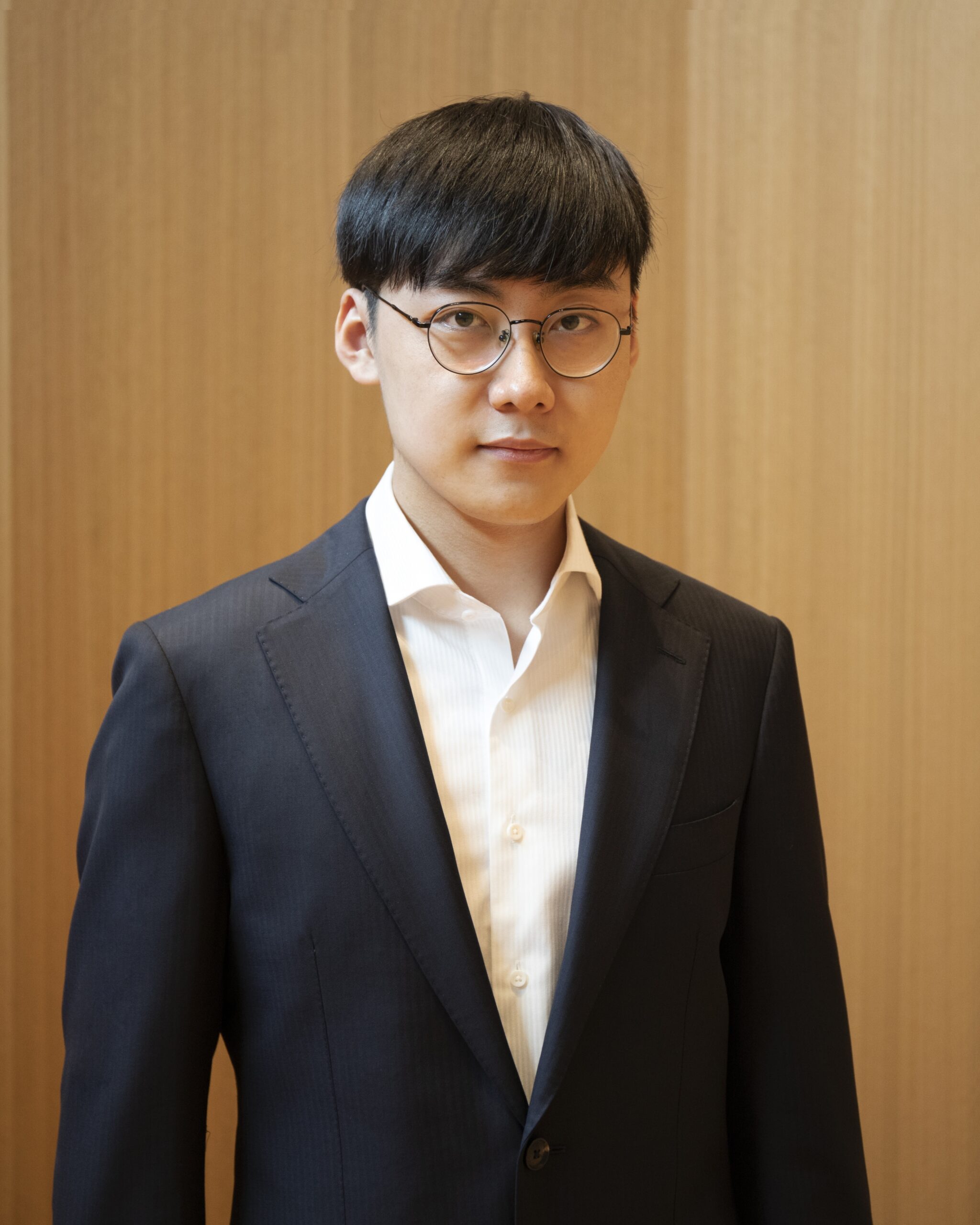
Pianist Jinzhao Xu has received prizes in more than ten national and international competitions, including the Wideman International Piano Competition in the United States, the KAWAI Music Competition in Japan, and the Dinu Lipatti International Youth Piano Competition in Romania. He has also achieved distinction in major international competitions, including reaching the semifinal round of the 74th ARD International Music Competition in Munich and the final round of the 7th Lyon International Piano Competition in France. Through these achievements, he has continued to present to audiences his refined and distinctive interpretations of a wide range of musical works. He has performed to enthusiastic acclaim at many important venues, including the National Centre for the Performing Arts, Beijing Zhongshan Concert Hall, Tianjin Grand Theatre, Tianjin Concert Hall, Shanghai Oriental Art Center, Shanghai Concert Hall, Qingdao Grand Theatre, Qingdao People’s Hall, Nanjing Poly Grand Theatre, Wuhan Bianzhong Concert Hall, Chengdu City Concert Hall, Xiamen Hongtai Concert Hall, Fujian Grand Theatre, Shenzhen Grand Theatre, Shenzhen Concert Hall, Shenzhen Pingshan Grand Theatre, Shenzhen Antuoshan Public Culture Center, Taipei Zhongshan Hall, Yokohama Minato Mirai Hall, Seoul Arts Center, JCC Art Center in Seoul, Hill Auditorium in Ann Arbor, Michigan, and the Prinzregententheater in Munich. As a soloist, he has appeared with orchestras including the Calgary Philharmonic Orchestra, Shenzhen Symphony Orchestra, Raanana Symphonette Orchestra, Munich Chamber Orchestra, San Francisco Conservatory of Music Orchestra.

As a chamber musician and collaborative pianist, Xu continues to expand and explore repertoire in a wide range of styles and genres, from Western instrumental music to works involving Chinese traditional instruments, and from Baroque music to contemporary works. He has maintained close artistic collaborations with many musicians, including the renowned Shanghai String Quartet, the Telegraph Quartet, violinist Weigang Li, suona performer Zhanzhan Wang, and cellist Youngeun Lee, Gold Medalist of the XVII International Tchaikovsky Competition. As the founder of the Oak Piano Trio, he and his colleagues won the National First Prize at the 2019 MTNA Chamber Music Competition in the United States. In 2024, as pianist of Trio con fuoco, he won First Prize at the 10th Briggs Chamber Music Competition, hosted by the University of Michigan.

Since Fall 2024, Xu has been pursuing the Doctor of Musical Arts degree in Piano Performance at the University of Michigan under Professor Christopher Harding, supported by a full scholarship and serving as a graduate student instructor in the piano department. He graduated from the Middle School attached to the Central Conservatory of Music in 2016; earned his Bachelor of Music degree in Piano Performance from the San Francisco Conservatory of Music in 2020; received his Master of Music degree in Chamber Music Piano from The Tianjin Juilliard School in 2022; and completed the Specialist Degree in Collaborative Piano at the University of Michigan in Ann Arbor in 2024.

About the Dame Myra Hess Concerts

The concerts are generously sponsored by the Paul Angell Foundation, the Illinois Arts Council and by individual donors.

Upcoming Performances

Stay connected with us on social
Join our mailing list and stay up to date.
<

Subscribe

* indicates required